Finding Nemo - 1st Day at School
I thought these 2 clips would be very apt this week with many of us starting with a new class, some children will be starting a new school, others moving into the juniors and some just going into a new class. There are lots of teaching opportunities.
|
|
Treasure By Chelsea Bartlett
Esther, a homeless woman, is searching through a junkyard. She passes by objects of possible use and worth in favor of things broken or old, until she finds just the right treasure.
|
|
|
Key Questions
|
Teaching Ideas
Describe the old lady's day, perhaps as a 1st person diary entry. Use descriptive language to show how special the objects are to Esther; introduce hyperbole, an old, leaky umbrella could let the sunshine through on hot days. How can something rusty be described to sound beautiful? Perhaps have some objects in class for the children to describe in this way. Link this to recycling and junk modelling. Check out the Recycled Art Foundation here on Facebook Link to The Tin Forest by Helen Ward also set in a Junk Yard, download the photo story here.
|
French Toast KS2
|
At the beginning of 'French Toast' we see the juxtaposition between the two main characters. One poor looking man, who could probably be called a tramp, the second a business man in a French restaurant.
The 'posh' man loses his wallet and in order to save himself the embarrassment of not being able to pay he orders a plethora of drinks to hide his mistake. |
When the tramp re-enters the bar shaking a collection tin the 'posh' man waves him away but a frail old nun makes a very charitable donation. The man decides he will try to pay his tab by stealing from the old lady. However, the police arrive to foil his clumsy attempt.
A twist in the plot leads to a humorous and interesting ending - with a not so swift getaway.
Both of the main characters reveal their true colours; by the end of the animation we are left thinking that perhaps we should not judge a book by it's cover.
Teaching Ideas (I shared this animation on The Literacy Shed Facebook Page and these are the responses from followers.
Louise Brooks This would be great for moral dilemmas. Play part of story then stop and asking is the person and what are they like. When a new character is introduced ask who is the better person - why? As each new character is introduced stop and 'pass judgement'. In the end who was the 'better' person.
Áine Uí Mhuineachán Brilliant animation. Could be used as PSHE curriculum. Pause at different stages. What should the main character do? What is the part of the lady? First impressions? Whose the good/bad characters in the story. Predict the ending.
Andrea Elizabeth Great animation !For a bit of creative writing, ask students to write the internal dialogue of one of the characters. Why do you think that is what the character is feeling/thinking? How does the tone change throughout?
If you have any more great ideas about how to use this animation in class please email me: rob@literacyshed.com
A twist in the plot leads to a humorous and interesting ending - with a not so swift getaway.
Both of the main characters reveal their true colours; by the end of the animation we are left thinking that perhaps we should not judge a book by it's cover.
Teaching Ideas (I shared this animation on The Literacy Shed Facebook Page and these are the responses from followers.
Louise Brooks This would be great for moral dilemmas. Play part of story then stop and asking is the person and what are they like. When a new character is introduced ask who is the better person - why? As each new character is introduced stop and 'pass judgement'. In the end who was the 'better' person.
Áine Uí Mhuineachán Brilliant animation. Could be used as PSHE curriculum. Pause at different stages. What should the main character do? What is the part of the lady? First impressions? Whose the good/bad characters in the story. Predict the ending.
Andrea Elizabeth Great animation !For a bit of creative writing, ask students to write the internal dialogue of one of the characters. Why do you think that is what the character is feeling/thinking? How does the tone change throughout?
If you have any more great ideas about how to use this animation in class please email me: rob@literacyshed.com
Wing KS2 KS3
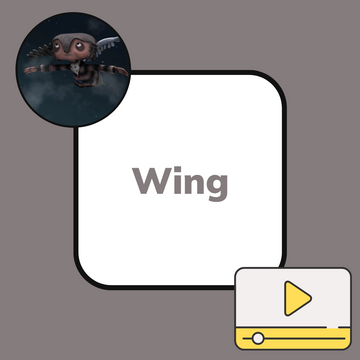
A solitary, one winged creature called Wing is harassed by a group of oppressive crows due to being weak and different from them. He decides that he wants to overcome his disability and escape from the forest. He builds a catapult and a mechanical wing to accomplish this. When he launches himself away from the forest, the wing malfunctions, and he crashes into the territory of the crows. The crows are about to harm him, but are then lured away by a two-winged humanoid, who the crows attack instead. Wing finds the creature, and discovers it is a female of his own kind, and that the crows have torn one of her wings off. As the crows come towards them, Wing gets the idea that he and the female can fly in tandem by flapping each of their single wings while holding onto each other, and they manage to escape from the forest.
|
By: Asger Grevil, Mette V. Madsen, Jonas Kirkegaard, Michael Bech animwork.dk/en
facebook.com/#!/pages/The-Animation-Workshop-Official-Page/10452541819 |
Teaching Ideas - This story could allow for a number of discussions such as bullying, working with disabilities, working together as a team. The children could also discuss the quotation at the end of the animation from Luciano de Crescenzo: 'We are, each of us angels with only one wing; and we can only fly by embracing one another.'
Children could retell the story with some detailed descriptions of the hero of the story or the 'crows.' They could experiment with 1st/3rd person narrative. The children could write dialogue between the two winged creatures at the end and create anti bullying slogans to be displayed in the 'crows' community.
Seeking Refuge - Juliane's Story
A Journey from Zimbabwe
|
12 Year old Juliane retells her story of living in a Zimbabwean Orphanage and being reunited with her mother before moving to the UK.
Juliane was 3 when her mum left and she was brought up by the people in her church, she had little water and even less food. She was taken away in a lorry, but jumped off when she saw her mother chasing it. They travelled to the UK and settled there. Juliane recalls her first day at school and the problems that she had in the early days. "At the end of a dark tunnel, there is always a rainbow." |
Could be a dynamic resource for all areas of the curriculum, in particular to PSHE and Citizenship, but also English, Geography, History and Art. A good illustration of why some people have to flee their country, and therefore helps raise questions about persecution and war. This could be used in PSHE and Citizenship lessons to start a discussion on what it's like for children adapting to life in the UK and the issues they are often dealing with when they arrive.
Writing Opportunities
See more seeking refuge animations on BBC Learning Zone |
The Black Hole KS2
|
Seemingly bored with his dull existence, one mans life is changed for ever when the photocopier in work churns out a portable black hole.
The man is tempted to use the black hole to steal things. He first uses the black hole to steal from the vending machine and then from the office safe, however it doesn't go to plan. |
|
Teaching Ideas
Ask the children to discuss what they would use the black hole for. Can it only be used for 'bad' things? Could it be used for good? If this was produced in the school photocopier room would it be best to keep it or destroy it? Can we justify our answers?
Writing Ideas
Ask the children to discuss what they would use the black hole for. Can it only be used for 'bad' things? Could it be used for good? If this was produced in the school photocopier room would it be best to keep it or destroy it? Can we justify our answers?
Writing Ideas
- Write a narrative about someone who finds the 'black hole' page,
- Write the next part of the story, who finds the man in the safe? Does he get away with it?
- Write a newspaper story about mysterious crimes that have been occurring, take witness statements etc that details seeing someone use the 'black hole'
- Write a description of what they place is like on the other side? Is it the same? Is it an opposite dimension, it may seem the same but somethings may be slightly different.
The Bridge (KS1 KS2)
This is quite a simple idea, the bridge is too narrow for the animals to pass. If they worked together they could get past, the bear and the elk are too stubborn and mean to help each other and they fall into the abyss.
The rabbit and raccoon work together and go on their ways. Ask the children what this film teaches us. They could come up with a moral and a slogan. |
|
|
|
Dangle
|
|
|
The Switch KS1 KS2
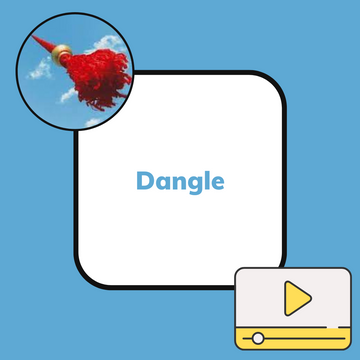
The switch links very well with 'Dangle'
You could discuss the term; 'Curiosity killed the cat.' Why do people say this? Why is good that living things are curious? Does it benefit them? Always? Who are the other boxes? |
|
Links could be made to intrepid explorers. Consider how explorers have to face the unknown e.g. crossing the seas and thinking they might sail off the edge of the world! Is it good to take risks? Should we always allow our curiosity to get the best of us? When is it important to be cautious?
Swing of Change KS2 KS3 +
Synopsis : New York 30's : Harry, a racist barber changes his mind at the arrival of a magical trumpet in his barber shop! www.swing-of-change.com
|
Swing of Change from Swing of Change on Vimeo. |
Could be used in history to prompt discussion on racial prejudice.
|
|
Writing Ideas
|
Whole class oral storytelling
Give the children a musical instrument to study e.g. violin, guitar etc. Start off a story tell the children someone finds the instrument in the street. Choose a child to say who found it. next child describes this person, what are they like where they live etc. E.g. could say his name is Jason, he is homeless, he is lonely, he looks scruffy. Include some rules such as the character cannot play the instrument at all. Next child describes what happens next. Where does he go etc Who does he take the instrument to? Next child describes this new character etc etc...
|
|
|
Soichiro Honda - A biography of a wise man KS2 KS3 +
The Honda story is the story of one man, Soichiro Honda, and his unparalleled achievement of bringing motor cycles to the masses. Soichiro Honda was a racer, a businessman, and a manufacturer. But most of all he was a dreamer. He dreamed of a better way of making piston rings, founded a small company, and began production. He dreamed of giving people everywhere an economical form of transportation, and began producing small motorcycles.
|
Teaching Ideas
There are many links here - Design,History,Geography, PSHE and literacy.
I would use this animation for children to take notes in order to write their own biography of Soichiro.
It could also be the inspiration for writing an autobiography or biography of another famous person - in the same style.
Writing a biography
http://smokeriders.com/History/Honda_History/body_honda_history.html
There are many links here - Design,History,Geography, PSHE and literacy.
I would use this animation for children to take notes in order to write their own biography of Soichiro.
It could also be the inspiration for writing an autobiography or biography of another famous person - in the same style.
Writing a biography
- Can we start with an inspirational statement or question like this film uses?
- Collect and group related points - family, work, achievements etc.
- Children create a story board for their biography.
- Children carry out hot seating activities - interviewing people that know or knew the subject of their writing.
http://smokeriders.com/History/Honda_History/body_honda_history.html
For the Birds - Animation about bullying. KS1 KS2
I use this film in assemblies and in PSHE lessons when we discuss, 'What is bullying?'
I show them the film without telling them we are doing a bullying less or a PSHE lesson and they often think it is a treat.
I ask them what they think the video tells us. Does it have a message?
Childrenwill often say that the small birds were mean to the big bird because he is different.
This sparks the debate. Who are the mean ones? Why are they mean? Are any of the small birds worse then others?
Is there a moral to the story? Could we give it a new title?
I show them the film without telling them we are doing a bullying less or a PSHE lesson and they often think it is a treat.
I ask them what they think the video tells us. Does it have a message?
Childrenwill often say that the small birds were mean to the big bird because he is different.
This sparks the debate. Who are the mean ones? Why are they mean? Are any of the small birds worse then others?
Is there a moral to the story? Could we give it a new title?
The P4C booklist from Jo Bowers
|
Mayfly Day by Jeanne Willis
Zoo by Anthony Browne How to live forever by Colin Thompson Falling Angels by Colin Thompson |
The Little White Owl by Tracey Corderoy
Ish by Peter Reynolds The Conquerors by David McKee Tusk Tusk by David McKee |
|
When The Dragons Came by Naomi Kefford and Lynne Moore
When a family-load of boisterous, bumbling dragons burst into peaceful Poppledown Town, there's sure to be trouble! Before long, the whole town is thrown into chaos. The local market is turned upside down, the library is louder than ever and the local playgroup has never experienced such disruptive pupils! Will Poppledown Town EVER be the same again? |
The Giving Tree by Shel Silverstein
The Giving Tree is a tale about a relationship between a young boy and a tree. The tree always provides the boy with what he wants: branches on which to swing, shade in which to sit and apples to eat. As the boy grows older, he requires more and more of the tree. The tree loves the boy very much and gives him anything he asks for. In an ultimate act of self-sacrifice, the tree lets the boy cut it down so the boy can build a boat in which he can sail. The boy leaves the tree, now a stump. Many years later, the boy, now an old man, returns, and the tree sadly says: "I'm sorry, boy... but I have nothing left to give you." But the boy replies: "I do not need much now, just a quiet place to sit and rest." The tree then says, "Well, an old tree stump is a good place for sitting and resting. Come, boy, sit down and rest." The boy obliges and the tree is very happy.
|
I am the King by Leo Timmers
One morning Tortoise is suddenly wearing a crown and he is very excited, thinking he is the king. His friends really have a laugh at that, but Billy Goat, Flamingo, Snake, Pig, Crocodile, Elephant, and Monkey all would like to be the king too. Who is the one and only king? Soon the answer is revealed |
The Mountains of Tibet by Modecai Gerstein
This story of the death and reincarnation of a Tibetan woodcutter is a beautifully gentle look at one human being dealing with life's choices and possibilities. As a boy, he thought about other worlds that he would someday visit; as a man, he thought of other countries and people, yet ``he was always busy with his work and his wife and children.'' After his death, he is given the option of being part of ``the endless universe some call heaven'' or living another life, and he chooses another life. The choices which follow take him through all the galaxies, stars, planets, creatures, peoples, countries, and parents before arriving at the final twist in this journey back to where he had been almost. |
|
Armin Greder
|
The Island
When the people of the Island discover a man and a tattered raft on their beach, they are reluctant to take him in. He doesn't look like them. But they cannot send him back to the sea where he will surely perish. Instead, they put him aside but even that doesn't solve their problem. The Island is an astonishing and powerful picture book about refugees, xenophobia, multiculturalism, social politics and human rights. It tackles big themes in subtle ways with a fable-like text and stunning artwork that will provoke discussion for upper primary and secondary school levels about issues that remain so much a part of our national discourse. |
The City
Following on from The Island, Armin Greder offers a contemporary mother-and-son fable that is powerful and compelling. Some time ago, in a big city in a distant country where winter would sometimes last three years, there lived a woman. She had a child. A son. And because she loved him very much she promised herself that he should be spared the terrible things that happen in life, and with him in her arms she left her house and the city and in a place where there were no roads and no bridges she built him a house and in it she cared for him and was happy. But one moonless night she died. A fable for children and for mothers, this courageous tale explores the effort and the suffering it takes to grow?and above all else, to let grow. |