The facts in the case of Mister Hollow UKS2+ KS3/KS4
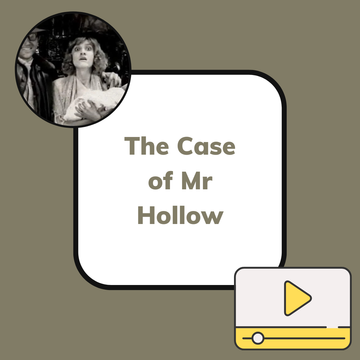
Spooky opening credits give way to newspaper headlines about paganism and missing children. An envelope dated 3rd November 1933 states 'Enclosed is the original photograph... Look Closely...'
Let the film run for a few seconds and ask the students what they can see in the picture. Some things are more obvious than others.
Asking the children to record everything they see like a Crime Scene Investigator will allow children to hone their note taking skills. You could discuss recording methods, including spider diagrams, flowcharts, symbols etc. They might spot that two of the men are sporting the same tattoo of the symbol we saw in the credits.
(I would probably keep the ending from them. Stopping the film at 4mins)
Let the film run for a few seconds and ask the students what they can see in the picture. Some things are more obvious than others.
Asking the children to record everything they see like a Crime Scene Investigator will allow children to hone their note taking skills. You could discuss recording methods, including spider diagrams, flowcharts, symbols etc. They might spot that two of the men are sporting the same tattoo of the symbol we saw in the credits.
(I would probably keep the ending from them. Stopping the film at 4mins)
|
Once the students have watched the film a couple of times allow for them to share their ideas with each other.
Ask the children to come up with a narrative for the film. What has happened prior to this picture being taken? Who are the people in the picture? Create a freeze frame with pupils posing as characters in the picture. Ask pupils to unfreeze one at a time and explain what they are doing there. Writing opportunities will include;
|
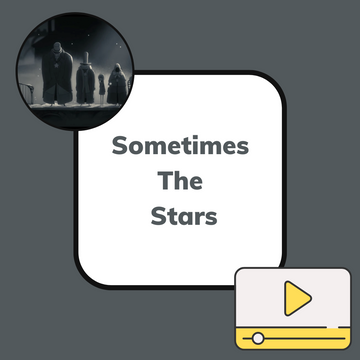
Sometimes The Stars by The Audreys
This is a music video from the fabulous Adelaide, South Australia band, The Audreys. The Audreys.com
Watch on YouTube
Watch on YouTube
|
|
Dark shadowy figures stand at a tram stop, snow falls and fog rolls across the picture.
This is the opening scene. Take a closer look and you will see that no faces can be seen, apart from one. She becomes the hero of our story. Look at the characters stood at the tram stop. There are some overtones of WWII Jews stood waiting for the train, a drab scene punctuated by stars on their clothes. The tram finally arrives and the faceless figures are on their way. Listen to the lyrics of the song and you will hear that 'every stop looks the same,' 'faces without names...drift away.' The people get off the tram one by one until the girl is left alone. |
Travelling through strange landscapes populated by huge songbirds in cages, massive clocks, but the dreary weather stays a constant. It is not long until the tram reaches the end of the line. But oh no it does not stop. The tram goes flying off into the abyss. When we think all is lost we see our heroine gliding through the clouds landing beside a mysterious creature, who she seems to know. Who is she? An angel perhaps?
Teaching Ideas
Teaching Ideas
- Describe the opening scenes.
- Describe the journey, what the girl could see as they went along, perhaps one of the other passengers.
- Write a newspaper report detailing what happened, maybe the driver thought everyone was off, the tram went over and they found the girl the next day amongst the wreckage.
- Write a conversation between the girl and the person she meets at the end.
- Write a first person account of the accident from the girls point of view,she could be sending a message from heaven.
Mysterious stories can start with a mysterious picture. (or 2)
Give each child the picture of the man. Ask them to brainstorm whatever they think about him. I like to stick the picture in the middle of a sheet of A3 and let them write around it.
Ask them to describe him in detail - if they put 'beard' ask them what is the beard like?
Ask what they think his house is like, what job does he do? How old is he? How do we know? Is he good or evil? Why do we think this? All these questions build up a character for the children to use in a story. How many times have we heard a child say... "I am just thinking about who to put in it."
You could add a picture of a setting (see picture) and ask the children to link the two. Does he live there or is he visiting someone there or is he hiding something there? Ask the children to use descriptive language in all of these steps.
Ask them to describe him in detail - if they put 'beard' ask them what is the beard like?
Ask what they think his house is like, what job does he do? How old is he? How do we know? Is he good or evil? Why do we think this? All these questions build up a character for the children to use in a story. How many times have we heard a child say... "I am just thinking about who to put in it."
You could add a picture of a setting (see picture) and ask the children to link the two. Does he live there or is he visiting someone there or is he hiding something there? Ask the children to use descriptive language in all of these steps.
The Mysteries of Harris Burdick
An editor's note tells of an encounter between a children's book editor named Peter Wenders and an author and illustrator named Harris Burdick, who says he has 14 stories that he has written; he has brought one picture from each story with a caption. He leaves with a promise to deliver the complete manuscripts if the editor chooses to buy the books. The next day, Burdick didn't show up. Burdick never returned to Wenders' office. Over the years, Wenders tried to find out who Harris Burdick was, but he never found out. Burdick was never seen again, and the samples are all that remain of his supposed books. Readers are challenged to imagine their own stories based on the images in the book.
In 1984, Chris Van Allsburg visited Wenders' office, and Wenders showed him Burdick's drawings. Van Allsburg decided that maybe if he published the drawings, they may find out who Harris Burdick was.
Both Wenders and Van Allsburg were sure that someone would come with information about Burdick. Then, in 1993, a dealer in antique books, told them that he had purchased an entire library that had previously belonged to a recently deceased woman, including an antique mirror with portraits of characters from Through the Looking-Glass. The mirror fell from the wall and cracked open. Neatly concealed between the wooden frame and the mirror was an image identical to Burdick's other works; its caption identified it being from the Burdick story "Missing in Venice."
As said on the Burdick website, Peter Wenders died in 2000 at the age of 91.
Lemony Snicket answers the question here. Who is Harris Burdick?
Teaching Ideas.
I love letting the children loose on these pictures coming up with back stories for each one. Debates can be had about each one. In 'The third-floor bedroom' there is much debate to be had about whether the birds are landing or taking off. This will certainly alter any narrative. Imagine come home and your wallpaper has flown away, or return home and find a whole flock of birds is hiding on your bedroom wall.
I use Mr Linden's library to stimulate mystery story writing. I ask the children to collect any verbs from the picture, breathing, snoring, growing, creeping, illuminating. They then match these with adverbs, creeping menacingly, sleeping peacefully etc. They then build these verb/adverb pairs into sentences experimenting with structure.
The girl lay on her bed peacefully can become. The girl was sleeping peacefully on her bed or even: Peacefully sleeping the girl lay on her bed. This can be extended further. The light gently illuminated her peaceful snoring as something crept menacingly from the book at her side.
Imagine creeping down the stairs in Unwelcome visitors and the feelings you have as the doorknob starts to turn. What happens next? Your body is like lead - describe the feeling and your thoughts.
What is happening? Why is it happening? Where is it happening?? Who are the characters?? When did this happen? How did it happen? - Answer these questions and you have the makings of a great narrative.
In 1984, Chris Van Allsburg visited Wenders' office, and Wenders showed him Burdick's drawings. Van Allsburg decided that maybe if he published the drawings, they may find out who Harris Burdick was.
Both Wenders and Van Allsburg were sure that someone would come with information about Burdick. Then, in 1993, a dealer in antique books, told them that he had purchased an entire library that had previously belonged to a recently deceased woman, including an antique mirror with portraits of characters from Through the Looking-Glass. The mirror fell from the wall and cracked open. Neatly concealed between the wooden frame and the mirror was an image identical to Burdick's other works; its caption identified it being from the Burdick story "Missing in Venice."
As said on the Burdick website, Peter Wenders died in 2000 at the age of 91.
Lemony Snicket answers the question here. Who is Harris Burdick?
Teaching Ideas.
I love letting the children loose on these pictures coming up with back stories for each one. Debates can be had about each one. In 'The third-floor bedroom' there is much debate to be had about whether the birds are landing or taking off. This will certainly alter any narrative. Imagine come home and your wallpaper has flown away, or return home and find a whole flock of birds is hiding on your bedroom wall.
I use Mr Linden's library to stimulate mystery story writing. I ask the children to collect any verbs from the picture, breathing, snoring, growing, creeping, illuminating. They then match these with adverbs, creeping menacingly, sleeping peacefully etc. They then build these verb/adverb pairs into sentences experimenting with structure.
The girl lay on her bed peacefully can become. The girl was sleeping peacefully on her bed or even: Peacefully sleeping the girl lay on her bed. This can be extended further. The light gently illuminated her peaceful snoring as something crept menacingly from the book at her side.
Imagine creeping down the stairs in Unwelcome visitors and the feelings you have as the doorknob starts to turn. What happens next? Your body is like lead - describe the feeling and your thoughts.
What is happening? Why is it happening? Where is it happening?? Who are the characters?? When did this happen? How did it happen? - Answer these questions and you have the makings of a great narrative.