The Literacy Shed
Follow us on Twitter and Facebook
  • The Literacy Shed Home
  • About
  • The KS1 Shed
  • Class Blogs Shed
  • The Fantasy Shed
  • The Other Cultures Shed
  • The Ghostly Shed
  • The Maia Walczak Shed
  • The Inspiration Shed
  • The Thinking Shed
  • The Music Video Shed
  • The Picture Book Shed
  • The Great Animations Shed
  • The Video Game Shed
  • The Love Shed
  • The Fairy Tale Shed
  • The Inventor's Shed
  • The Reading Shed
  • The Poetry Shed
  • The Adventure Shed
  • The Mystery Shed
  • The Sci - Fi Shed
  • The Resource Shed
  • The Myths and Legends Shed
  • The Film Trailers Shed
  • The Christmas Shed
  • The Fun Shed
  • Farmer Dan's Barn
  • The Sports Shed
  • The Lighthouse
  • The Flying Books Shed
  • The Prop Shed
  • The Images Shed
  • The PhotoStory Shed
  • The Advert Shed
  • The History Shed
  • The Tool Shed
  • The Authors Shed
  • The Russ Brown Shed
  • The Weblinks shed
  • The Non-Literacy Shed
  • Contact Us
  • Ed Blog Shed
  • My Class Read [#myclassread]
  • High Littleton C of E Primary
  • Christ Church C.E. Primary School

The Inventor's Shed

Since the time of cavemen people have been inventing things to improve our lives.  However all of these inventions do not always go to plan.

The Invention of love

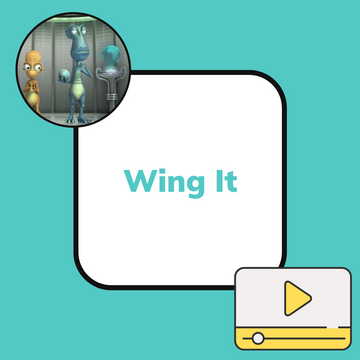
Wing it                                             KS2

Wing it is another animation in the 'Steam punk' genre, with a difference.  It could have been placed in the sci-fi shed.
This animation is set in 1893 and we first meet our hero, Sherman, working on his plans for a flying machine. 
There are lots of visual clues which show us when the film is set.

All seems pretty straightforward until we see some strange creatures spying on Sherman.

As the story moves on it seems that Aliens were responsible for all major inventions throughout history. 

The aliens implant Sherman with the knowledge to create his flying machine.  His perseverance was worth it in the end!
Picture
There are a variety of writing tasks that can be inspired by this animation.

Children could 'invent' there own flying machine and label their diagram before writing instructions on how it works.

Write the dialogue between the aliens.

Write a description of his machine, of his workshop or one of the aliens.

Children could write a non-chronological report about famous inventions or a biography of a famous inventor.

Children could rewrite the story as a recount from Sherman's point of view or from the alien's point of view.

Children could write a newspaper story about the great 'flying machine' and Sherman, inspired by the image at the end of the animation.


Links: PSHCE - Perseverance,
History - Victorians and Inventions.


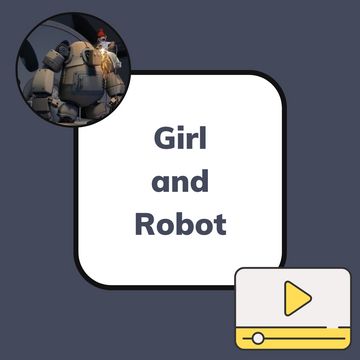
Girl and Robot est. 1892                                    KS2

Picture
A 3D animated steam-punk set in a futuristic 1892.

A young girl builds a steam powered robot but has trouble getting it started.  After turning up her power source too high the machine explodes, spraying cranks, pistons and sprockets around the room.

There is a surprising and touching ending as we discover that the robot is alive and has saved our heroine from a falling girder.

Teaching Ideas
  • Watch the film up to the title screen.  Ask the children if they can guess what it is going to be about.  Are there any clues.
  • Watch some more and ask the children to come up with questions.  (Why is she building it? where are her parents? Why is she not at school? etc)
  • The children can collect vocabulary to do with machinery, cranks, pipes, spanners, sprockets and bolts.  They can then use this vocabulary in their written work.
  • Design their own robots and label with descriptions.
  • Create the bare bones for the story and use these to write a narrative.
  • Create a journal page for the girl, charting her successes and failures over a week.  Perhaps using language to show her frustration. 
  • What happens next?  Children write the next part of the story.
  • Write instructions for building a robot.

Check out planning, presentation and resources for The Inventors Shed here


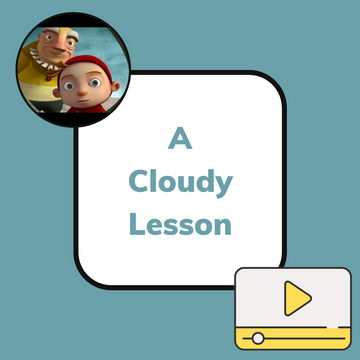
A Cloudy Lesson

Picture
A cloud maker and his apprentice grandson are busy making clouds but everything doesn't happen as it should.  As things don't go according to plan, the pair of them learn that good ideas come from happy accidents.

- Write instructions for 'How to make clouds.' Use imperatives.
- Write dialogue between the two.
- Invent ways in which other natural phenomena are made e.g                  lightning, thunder, etc
- Write a news report detailing what people saw in the sky, perhaps        interview the cloud maker for explanation.

Cross curricular link with Science and or Geography - use this as a jumping off point to your weather topic.  Can children explain why this is not right?  Link with Water cycle animation in the Non-Literacy Shed.

Make sure you go cloud spotting out side - can the children find shapes in the sky? Perhaps use similes and metaphors to describe them e.g. a cloud chasing another like a puppy across the sky.

Check out this great work produced by Y6 children at Mandale Mill Primary School 

Steam Powered Computer

Picture
Steam-punk is a genre which originated during the 1980s and early 1990s and incorporates elements of science fiction, fantasy, alternate history, horror, and speculative fiction. It involves a setting where steam power is widely used—whether in an alternate history such as Victorian era Britain or "Wild West"-era United States, or in a post-apocalyptic time —that incorporates elements of either science fiction or fantasy.

I would use this picture as a jumping off point.  Who do you think would use this computer?

Can you describe this persons appearance?
What does he use this for?
Where did he get it from?

You could get a whole narrative story from this single image.


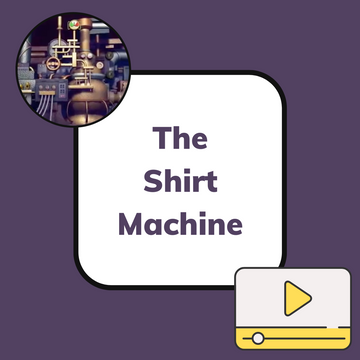
The Shirt Machine by Jon Davis

Picture
This film was part of the Year 4 scheme of work in the old Literacy Framework. It is still worth a look.  I have used this animation on numerous occasions in years 4- 6.

- Draw plans of the shirt machine.  Label the parts that the children use and where they find them. 
- How to use commas in lists - Make a list of all the components of the shirt machine. 
- Write instructions for the Shirt Machine using temporal connectives.  Next, then and imperative verbs, stamp, push, pull etc


- Discuss the use of Onomatopoeia (sound words) to describe the sound the machine makes as it works.  Can the children describe the sounds of other machines?  There machines?
- Children can create a ledger as a class full of their shirt ideas.  Draw and label designs based on the animation, flying shirt, edible shirt etc. 
- Write adverts - advertise their shirt and it's benefits.
- Hot seating - Can we ask the uncle questions?  What would his answers be?
- Why is the girl's favourite shirt so special?  What makes something special?  Do the children have any special items of clothing?  Why are they special?


Cross curricular links:
Geography - find the Isle of Mull, discuss what it is like there etc.

D+T - lots of designing ideas.  Design machine that makes wonderful objects or design t-shirts that come out of machine.

PSHE - Discussing things that are special and why they are special to individuals.

The Inventor's House

Picture
An inventor lives here.  Can you describe him and his house?  Perhaps you can draw your own house for an inventor and label it.


Red Miss Take

In this film the inventor is creating characters for a fairytale.  Discuss why he is making the characters.  Who is he making them for? (Brothers Grimm)

Writing Ideas
  • Write instructions for using the machine using temporal words.
  • Write about the character you would make.
  • What would the recipe be for making Red Riding Hood?  Big Bad Wolf? Jack of Beanstalk fame.  Think about the language of recipe (imperative verbs)
  • Write the narrative for the story.
  • Write dialogue between the characters.
  • Write the ending to the story.


top of page

The Literacy Shed

@redgierob