'Made of More' The Latest Guinness Advert
The cloud came from the sea.....
He was not like other clouds,
The wind could not command him,
The more he saw, the more he did,
And the more he did, the more he became,
You see he wasn't just a cloud...
He was a cloud made of more.
Teaching Ideas
He was not like other clouds,
The wind could not command him,
The more he saw, the more he did,
And the more he did, the more he became,
You see he wasn't just a cloud...
He was a cloud made of more.
Teaching Ideas
- Discuss the idea of personification. Can a cloud have a personality?
- Go outside and look at shapes of clouds, perhaps take some photographs and then let children describe them using personification, similes and metaphors.
- Ask children where this strange cloud came from? It cannot be commanded by the wind, who is controlling it?
- Does the cloud have a purpose in life?
- Children could write the clouds biography either in 1st or 3rd person, describing him growing up, part of the water cycle, being just another ordinary cloud in the sky until one day..... Something happened to change all that.
- Can write the narrative of the advert in 1st person, what does the cloud think?
- The are many other ideas. If you can think of a great one please let me know by email: rob@literacyshed.com
The Windmill Farmer
A conscientious farmer tends to his crop of windmills and watches them blossom through the seasons until sadly the crop is damaged by a winter storm. Helpless the farmer resigns to his fate by the time the thick winter snows arrive.
Teaching Ideas
Teaching Ideas
- Create an emotions line graph charting the farmers mood from hopeful optimism at the beginning of the film, the joy of seeing his crop flourish, into despair after the destruction.
- The children can write a first person narrative also describing the feelings of the farmer, watching tentatively from the windows waiting for the 'green shoots of 1st growth.' This can be a set of diaries exploring the mood at certain points.
- Children research wind farms and have class debates about their effects on the landscape.
- Write letters of complaint to the farmer about how his wind farm is spoiling the countryside, or messages of support for his beautiful crop and his efforts to help the environment.
- There are links with Jack and the Beanstalk, perhaps the children can create a story about something else growing from seed. What would they like to grow from seed? A money tree perhaps!
- Think about personification of weather describing the 'vicious wind, teasing the windmills before decapitating them one by one as they pleaded for mercy!'
- This could be the basis or some beautiful art work, silhouettes of windmills etc.
|
I would probably watch the film with the children without the narration whilst playing some beautiful calming music such as Handel's water music or Holst's Jupiter.
|
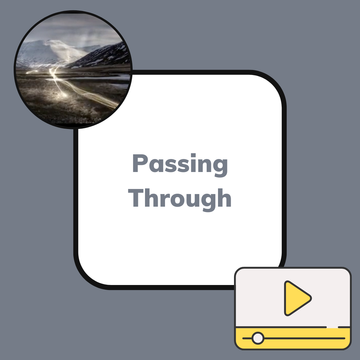
'Passing Through' Beautiful Landscapes
"A single ray of light from a distant star falling upon the eye of a tyrant in distant times."
Light beams pass over and dance around the beautiful landscapes of the world. This film with special effects can inspire some amazing descriptive writing. The light beams could be probes sent by aliens - spying on the Earth and then forming a landing site at the end. |
Germans in the Woods
An animated recount from Joseph, aged 90. Joseph, a veteran of World War Two recounts the events of one day during the war.
Joseph describes shooting and killing a young German soldier in self defence. In the second half of the animation he describes what effect the death had on him and how he has never been able to get the 'boy' out of his mind. The animation touches on sensitive issues but is suitable for KS2 and above. Link to 'The Piano by Aidan Gibbons' below. |
Teaching Ideas
I would use this animation in a broader unit about WWII rather than a stand alone Literacy lesson. For discussion purposes pause the animation just after Joseph shoots the German. Discuss what feelings he might have. Ask the children to discuss whether or not it is 'Right' to kill someone in times of war. Can it ever be right? Why do the children think it effected Joseph so much? Could create a conscience wall. Writing
|
Release your imagination.
|
On a grey day the grey people are on their way to work. Everyone is trudging in the same direction until one dreary commuter is knocked out of the flow. This triggers some amazing effects.
I would use this film to practice the use of similes and metaphors. The 'workers' are all grey, actual walking newspapers, they become colourful, do they actually ride off on a butterfly or is 'like' they were on the back of a rocket?) It could also be used to inspire the children to stop being grey and writing boring things. To become colourful and release their imagination. |
|
Origins - The story of a lone robot
|
This video could be used to stimulate narrative story writing.
Film Literacy Watch the film with the children discussing various points Where did the Robot come from? Why is it alone in the woods? Inference and deduction - How can we tell he is lonely? Does he feel at home in the woods? What is the factory like inside? Why does he decide to go back into the woods? Pause it before the gates of the factory and ask the children to debate whether or not going inside would be a good thing. Can they give reasons? Can they write about what is inside and why it is a good idea to stay in the woods. Compare with Pixars Wall-e |
Writing ideas:
Show not tell – ask the children to write about a being wandering through the woods, describing him and his surroundings without revealing what he is until the end. Write an alternative ending – the robot decides to go into the factory or gets spotted by the guards as he walks off. Use description to alter the setting, for example, he could go into the factory – it could be an amazing place like Willy Wonka’s factory or it could be a sinister place. Analyse how the descriptions would differ. Create a friend for the robot. Draw or describe him. Give him a personality. There could be a whole class of robots, created in DT and woven into each other’s stories. Write a diary entry for the robot focusing on the events in the film. Write a letter from the robot to his long lost family. |
Replay - An amazing, apocalyptic animation
|
This animation is a tear jerker. Set in a post-apocalypse land a brother and sister struggle to survive.
The little brother is eager to escape the confines of the bunker and when his sister brings home a tape recording of children playing he cannot resist anymore. The urge to play with others is too much. The small amount of dialogue is in french. This leaves it up to the children to decide what is being said. I use this animation as a writing stimulus, there is so much to do with it. I have used it to; write a conversation, write persuasive arguments, describe a setting, create storyboards, write diaries etc. |
In the original French
With English subtitles
Powerless - A modern day Pinocchio
In this film a man builds a robot. Whilst he is asleep some strange beings power up his robot who mysteriously comes to life.
|
|
- Describe the opening scene. Can the children do it without directly mentioning the robot? e.g. describe the man snoring in messy workshop, giving clues that there is something there but not saying what. (Something not quite alive.)
- Complete a story board/story map to aid narrative writing.
- Create a mood map
- Build up tension in story writing - as the man follows the robot through the woods - mirror the music. (rich description)
- Many many opportunities for descriptive writing.
- Write a dialogue between the two fairies and between the man and the robot.
- Create own model robots to star in their own narratives and use to make own animations.
- Compare and contrast with Pinocchio story? Can children write another fairytale in futuristic style?